Monday, September 9, 2013

Thursday, September 5, 2013
10TH AIFF 2013 NOMINEES LIST

BEST FEATURE FILM-NIGERIA
1.
AIYEKOTO
– ADEBAYO TIJANI
2.
NEXT
PRESIDENT – DESMOND ELLIOT
3.
TORN
– MOSES INWANG
4.
WHEN
DREAMS FALL APART – CHICO EJIRO
5.
SAVE
THE CHILDREN – MAGNUS EDET
6.
BROTHERS
KEEPER – IKECHUKWU ONYEKA
7.
LIES
MEN TELL – UCHE JUMBO
BEST FEATURE FILM- FOREIGN
1.
STORM
WARRIORS – CHINA
2.
AGNUS
DEI - KOSOVO
3.
LINE
OF SIGHT – JORDAN
4.
ANDALUSIA
MY LOVE – MOROCCO
5.
SUNNYSIDE
- BULGARIA
6.
SUJET - CANADA
BEST SHORT FILM-NIGERIA
1.
SCANDALOUS
MERCY – PETER THOMPSON
2.
PARADOX
– DESMOND ELLIOT
3.
OGONDAH
– WILLIS IKEDUM
4.
SURVIVAL
– SEUN OLOKETUYI
BEST SHORT FILM- FOREIGN
1.
MALICE
AND PENCILS – UNITED KINGDOM//NIG
2.
FRANCOIS
FIRST DAY – FRANCE
3.
THE
DOCK OF DESTINY – MOROCCO
4.
GROWING
UP – ABU DHABI
BEST DOCUMENTARY FILM
BEST DOCUMENTARY FILM
1.
THE
PHOENICIANS – MALTA
2.
THE
COURT – GERMANY
3.
ROLLING
DOLLAR; THE LEGEND UNPLUGGED – NIGERIA
4.
THE
TRUTH BE TOLD – NIGERIA
5.
DAUGHTERS
OF THE NIGER DELTA - NIGERIA
BEST EXPERIMENTAL FILM
BEST EXPERIMENTAL FILM
1.
JAND
HUSTLE – EHIZOJIE OJESEBHOLO
2.
DREAD
– AGBO KELLY
3.
PATROIT
– AGBO KELLY
4.
I-GAMES
– ALEXANDRA KURE’AVE HUL
BEST ANIMATION FILM
BEST ANIMATION FILM
1.
ROMANCE
OF WOOD LIU HIU – CHINA
2.
PROTECT
US – NIGERIA
3.
REALITY 2.0 – GERMANY
OUTSTANDING MALE ACT
1.
BLOSSOM
CHUKWUJEKWU – FINDING MERCY
2.
DESMOND
ELLIOT – LIES MEN TELL
3.
PRINCE
OSSEI – OFF THE HOOK
4.
MAJID
MITCHEL – BROTHERS KEEPER
5.
CHESTER
OSAGIE- MISSION TO MAMURO
6.
ODUNLADE
ADEKOLA – MUFU OLOSA OKO
OUTSTANDING FEMALE ACT
OUTSTANDING FEMALE ACT
1.
CHARITY
OFEM – SAVE THE CHILDREN
2.
BANKE
AMOLE -ADAMS – MISSION TO MAMURO
3.
NADIA
ODEH – LINE OF SIGHT
4.
UCHE
JUMBO – LIES MEN TELL
5.
JACKIE
APPIAH – OFF THE HOOK
6.
OMONI
OBOLI – BLUE FLAMES
OUTSTANDING FILM IN DIRECTING
1.
AIYEKOOTO
– ADEBAYO TIJANI
2.
PENCILS
& MARLICE – OROK DUKE JNR
3.
BROTHERS
KEEPER – IKECHUKWU ONYEKA
4.
NEXT
PRESIDENT - DESMOND ELLIOT
5.
LINE
OF SIGHTES – ASIL MANSUL
6.
STORM
WARRIORS – PENG FA & PENG SHUN
GOLDEN JURY FILM
1.
BROTHERS
KEEPER – NIGERIA
2.
NEXT
PRESIDENT - NIGERIA
3.
MALICE
AND PENCILS – UNITED KINGDOM//NIG
4. STORM
WARRIORS – CHINA
5
THE
PHOENICIANS – MALTA
Wednesday, September 4, 2013
U.K., Morocco Sign Film Co-Production Treaty
The pact will give film makers from the two countries access to tax incentives in both territories .
LONDON -- The U.K. and Moroccan governments have signed a co-production treaty to allow the two countries to "strengthen ties within the film industry, encourage the sharing of knowledge and ideas, and drive economic growth through film production."
LONDON -- The U.K. and Moroccan governments have signed a co-production treaty to allow the two countries to "strengthen ties within the film industry, encourage the sharing of knowledge and ideas, and drive economic growth through film production."
It
is expected that the treaty will be extended "in the near future" to
include TV production as well, the parties said.
Negotiated
by the British Film Institute and Centre Cinematographique Marocain (CCM), the
national cinema agency of Morocco, the treaty also provides tax incentives for
productions.
Productions
qualifying under the terms of the treaty will be able to access the benefits of
national status in each country.
In
Morocco that means tax incentives, while in the UK qualifying productions will
be able to acquire the British movie tax relief and apply to the BFI's film
fund -- the U.K.’s largest public film fund with a current allocation of $34
million (£22 million) annually to invest in the development, production and
completion of feature films.
U.K.
government culture minister Ed Vaizey said
the treaty recognizes "the wonderful collaborative relationship that
already exists between the creative industries of the U.K. and Morocco, as well
as putting in place strong financial incentives to boost film production in
both nations."
Director
general of the Centre Cinematographique Marocain Nour-Eddine Sail said:
“This treaty will help us create sustainable cultural partnerships between our
two film industries and give filmmakers in both our countries access to new
markets, new creative opportunities and financial advantages. Our intention is
to expand this ambition into the area of TV production too so that content
producers for high end television also gain the cultural exchange and financial
benefits."
BFI
chief executive Amanda Nevill noted
that British filmmakers, "from David Lean through
toChristopher
Nolan," have long looked to Morocco for its landscapes and
substantial production infrastructure.
Nolan
shot footage for Inception there
and other Hollywood backed productions include The Bourne Ultimatum and Sex and The City.
"This
treaty will be a catalyst to grow opportunities to pool creative and financial
resources and foster a deeper sense of collaboration,” Nevill said.
The
U.K. currently has nine bilateral co-production treaties in place with
countries including Australia, New Zealand, Canada, France, Israel and India.
Tuesday, September 3, 2013
PR GURU, THEODORA IBEKWE’S SECRET WEDDING

UK Nollywood
Actress and Producer, Theodora Ibekwe got married at a secret location on
Sunday 1st September. Her husband is the charming, Production Accountant and
Associate Producer, Ayo Dapo Oyebade.

Theodora
Ibekwe who has an exclusive fashion style always has her followers on tenter hooks for her
next fashion statement and she never disappoints , she was styled by Desiri
couture in a yellow gold satin and tulle dress featuring ruched details,
strategically placed intricate embroidery, and dramatic peplum , makeup and
hair by Libeks Bc and photography by instant portraits.

Sunday, September 1, 2013
"FILM FINANCING IN AFRICA – OPPORTUNITIES AND IDEAS."
A Keynote presentation at the Inaugural Uganda Film
Festival in
Kampala, Uganda by Femi Odugbemi, Executive Director
I-REPRESENT International Documentary Film Forum.

Distinguished Filmmakers, Participants
I Thank you very much for this opportunity to be here and
I am excited by the possibilities that this gathering can bring for the Ugandan
film industry, the economy and the issues of cultural diplomacy not only for
this great country but for African peoples at large. Africa needs every
tangible effort from its individual nations to take the continent to the next
level – an objective to which a vibrant viable filmmaking industry can uniquely
contribute.
There are quite a number of things that the African
continent needs, one of them is a strong filmmaking culture. This is in part
because films have a unique way of creating models for its audiences and
reshaping their outlooks, but more importantly because filmmaking IS business
and it can hold its own in contributing significantly to economic growth in
terms of youth employment, receivable tax incomes and ancillary growth of other
professions and small-scale businesses that feed off of the patronage of film
projects. But much more than that, in a world where your economy is impacted by
your "brand identity and projection" films are critical promotional
and cultural tools in shaping perception in a globalized world.

The influence of film is well understood by many leading
economies of the World; which are creating and funding structures and
institutions that can help to perpetuate the film art. In Germany, since 1979
every federal state has been putting up its own funding programmes, and the
spending of the German Federal Film Board is put at 96.72 million Euro as at
2005. The British film Institute has a plan of increasing its investment in
film production and development annually to 24 million pounds by 2017. The
French government provides roughly half the funding for the Cannes film
festival, and in 2012, the country's film business was buttressed by more than
€749 million. Some states in the U.S. and Canadian provinces will provide
subsidies or tax credits for film production expenditures if all or parts of
the film is shot in their state.
Here in our beloved continent, South Africa is perhaps
the most clued-in economy in terms of how they have fashioned a multi-layered
approach to film investment, financing and out-of-country marketing and
promotion of their film industry.
The South African government smartly identified the film
industry as a sector with excellent potential for growth, and a catalyst for
both direct and indirect employment of people from different sectors of the
economy. And they have reaped great rewards financially. Their film and television
industry contributes around R3.5-billion a year to the country's economy,
according to a 2013 study conducted by the National Film and Video Foundation,
an agency of the SA Department of Arts and Culture.
The South African film and television industry
contributes around R3.5-billion a year to the country's economy, according to a
2013 study conducted by the National Film and Video Foundation, an agency of
the Department of Arts and Culture.
In 1995, when the country first became a viable location
venue for movie and television production, the industry employed around 4,000
people. Today this has grown to around 25,000 people. The benefits of a proper
investment in the film industry are clear, especially when it comes to bringing
in foreign exchange. Co-productions with international companies especially
result in the direct investment of millions of dollars into the economy.
But the underlying intelligence for urgent and deliberate
structural investment in the film industry by government goes beyond its
economic value. It is about its cultural relevance. Many Western countries are
consciously (re)positioning perspectives about their identity and are creating
imageries and images that attracts favourable reviews to their civility in the
comity of nations. Much more than any other continent in the World, Africa has
suffered greatly from the global information order that is skewed towards
negative branding of the African experience.
If we consider the quantum of positive influence that the
Nigerian film industry (Nollywood) has brought to the African evaluation of our
own self-worth on the one hand and the global perception of the African
continent on the other, you will agree
that the art of film IS the
catalyst to kickstart the perception change that the continent so desires. With
the democratization of filmmaking through digital technology, Africa is
continuously being confronted with
enormous opportunities as never before to define its own identity and civilization;
to state who we are and how we want to be perceived by the rest of the World in
our own words and imageries. It is my strong view that every government in
Africa has a duty to set about creating enabling regulatory frameworks to
encourage the production of local content as a way of projecting its people's
heritage through its stories.
Recently, after more than 20years of concerted efforts,
the Nigerian government has begun providing multi-level support for our film
industry through different funding and tax incentives to be executed by different
government parastatals. In 2010, the federal government of Nigeria announced an
investment of $200 million into the development of the entertainment industry,
and later an intervention fund of N3 Billion christened Project Act Nollywood.
These are very positive steps in the mass of what is needed to be done.
Similarly, I believe every African country should have a National Funding
structure that can subsidize the cost of film production, incentivize
established film makers, encourage emerging filmmakers, and create a buoyant
platform for culture and tourism development.
The economic reality of many African countries clearly
makes it difficult, if not impossible, for many filmmakers on the continent to
fund their own films. Many of our financial institutions do not also key into
the business of filmmaking, and the few that provides some opportunities for
the film industry do so with terms and conditions that may not be practical
within the creative industry. A low budget Hollywood film will cost about $20,000
to make, for some African filmmakers, that is still a huge amount of money to
raise as an individual.
So, What non-governmental funding opportunities are
therefore available to African filmmakers?
NGO GRANTS
Currently, there are several non-governmental
organizations across the World offering funding/grant specifically targeted at
African filmmakers. These funding support all genres of filmmaking with
objectives ranging from culture propagation, to democratic values, creative
contribution, human rights defense, social activism, education, local film
development, and a lot more. For example:
- The IDFA Bertha Fund supports filmmakers and festivals
in developing countries, with the aim of stimulating local film cultures and to
turn the creative documentary into a truly global film art.
- The Alter-Ciné Foundation offers a yearly grant to
young film and video makers from Africa, Asia and Latin America to produce
films on the theme of human rights and freedoms, including social and economic
rights, women’s rights, the right to culture and artistic creation.
- Movies That Matters offers modest financial assistance
(up to € 5,000) to human rights film events in Africa, Asia, Latin America, the
Middle East and Eastern Europe.
- Sundance Institute's Fund and Awards provides
grants between $1 and $2 million per
year to support U.S. and international contemporary independent films.
-And of course there is the African Development Bank
funding available under its SME framework.
The list is long and the scope of funding is wide and
interesting. You can simply go on the internet and access information about a
lot of these existing funding structures.
I must be quick to point out however that quite a lot of
these grants or funding pursue some interests of some sort which the filmmaker
must align with before they can benefit from the fund. This raises a question
of finding a midpoint between the creative quest of the filmmaker and the
interests that the funding organization stands for - sometimes, there is no
such midpoint, in which case the filmmaker must source his/her own fund.
Beyond this, what I find utterly disturbing is that many
African filmmakers do not take advantage of some of these funding, simply
because they consider the process cumbersome. In the case of Nigeria, perhaps
only two or three major producers are known to have actually accessed the fund
from the Nigerian Government's $200 million investment in the entertainment
industry. There is a general withdrawal by the community of filmmakers in the
country from applying for the fund based on what they consider the 'undue
rigour' of the process.
CROWDFUNDING
In the alternative, filmmakers can look to crowdfunding
to finance their films. This is a largely internet based network of individuals
who pool their money together to fund the production of a film. There are well
over a hundred internet sites that provide crowdfunding services; Kickstarter
and Indiegogo tops the list. Expectedly, some of these sites do not cater for
African fundraising concern - some do not even allow fundraisers outside their
region. There are staggering efforts
from some organizations in Africa to create crowdfunding sites but not
so much has been achieved in terms of popularity and functionality.
Currently, Africa has a big gap in SME financing (both by
government and financial institutions). Moreso because the terms and conditions
that come with some of the SME financing are always beyond the reach of the
beneficiaries. Crowdfunding provides a viable alternative that can be trusted,
and I think that creative entrepreneurs and computer software programmers and
developers can collaborate to create platforms that are specific to the
peculiar needs of African small business terrain.
Going into the future, African filmmakers must put some
pressure on their governments to create National film funds - filmmaking is too
serious a venture for government not to invest in it. It is economically viable
and serves as a store of cultural identity and a gauge of national aspiration.
This must be a multi-level process where even local authorities can create
enabling grounds to foster filmmaking.
TAX RELIEFS & WAIVERS
There is also the option of providing tax relief or
waivers for film production projects to encourage filmmakers. This has been
done in several parts of the World and it is remarkably successful. South
Africa has a tax relief structure for filmmaking that many African countries
can adopt or build on. The Nigerian government is also directly investing in
the country's film industry through grants and loans to filmmakers and the
impact of this investment is visible in the quality of films that is being
produced now in the country.
LOTTERY
Lottery is also an effective way of creating funding for
filmmakers. If organized bodies or government sets up lottery programmes that
is aimed at directly providing funding for film project, it would go a long way
in increasing the quality and quantity of films being made in Africa and it can
also allow filmmakers to work on subjects that they choose, expressing their
creativity as they so desire as opposed to when they are being funded by NGOs
that are pursuing specific interests.
There is also need to touch upon the importance of the
role of professional collectives such as filmmaking Guilds and associations in
making the right economic arguments to governing authorities on the need to
invest in the film industry as a priority development sector capable of
contributing significantly to growing the GDP.
Guilds must articulate and train filmmakers in their
ability to construct sensible business plans for their film projects that
demonstrates a clear understanding of distribution realities and the marketing
channels that will estimate the capacities of the project to perform creditably
at the box office, in dvd distribution, in online sales and various mobile
device points of sales now available to consumers.
Guilds must be proactive in engaging government through
intelligent position papers and public debates to adequately inform national
policy.
Guilds have a duty to focus on improving quality of
product through training and re-training of practitioners as technology evolves
and the tools and techniques of filmmaking itself invite constant
reorientation.
Speaking about technology, there is are important
challenges to the future success of African cinema that we must focus to
address.
Africa today is largely a consumer of technology and is
yet to join the league of countries that are primary producers. So while
African cinema is constantly evolving and trying to catch up with Western
cinema, in terms of technology we continue to face important challenges.
Creating certain genres of stories especially ones that explicate the mysteries
of African mythologies, for instance, require existing technology to be
customized for the filmmaker to successfully tell his story. In our environment
today that would be financially crippling to say the least.
Successfully broadening genres in African Cinema is
inhibited by this. African filmmakers would find it challenging to create films
in the science fiction and other genres that require heavy technological
influence for a while.
Secondly, we need to urgently broaden the artistic appeal
of our films and be able to offer more works that compete strongly in major
festivals and can be acquired for international distribution. Funding for films
that win enough business to create the kind of model sustainability we all
yearn for, does not come easy. It is more than just about the content of the
film, it is also about the context and craftsmanship of the product.
To achieve that, we have to better emphasize and
encourage professional training. We need to focus on training with emphasis not
only on equipment technology but as much on the artistic use of technology. It
is not necessarily about spending more money as being more efficient with money
spent.
We need institutional interventions in curriculum that is
well researched and standardized so that emerging filmmakers are skilled in the
creative thought-processes. Guilds should engage tertiary institutions so that
film schools are created as intervention tools in empowering emergent
filmmakers.
Thirdly, there is need for more collaboration among
African Filmmakers on individual levels and at governmental levels. There has
been some form of progress in that area, but we need to work together better.
We have not yet quite grasped the full power of collaboration. It provides a solution for instance to the
primary challenge of funding, and also a sharing of skills and knowledge. Of
the many aspects of developed film industries, one I would love our young
filmmakers to take away and appreciate better would be the idea and the concept
of collaboration.
Co-Production treaties amongst African countries is an
urgent goal. It is strange that South Africa for instance has signed many
co-production treaties with several countries in Europe and with Canada and the
US but hardly any within Sub-Saharan Africa.
South Africa has signed co-production treaties with
Canada, Italy, Germany, the UK, France, Australia, New Zealand and Ireland.
This means that any official co-production is regarded as a national production
of each co-producing country, making it eligible for any benefits or programmes
of assistance available in either country. South Africa also has a memorandum
of understanding relating to film with India.
The benefits beyond the financial spreads to development
of human capital critical to sustaining growth.
Finally, we must underline the reality that ALL creative
industries are in the midst of a pivotal shift, driven by emerging
technologies. The extraordinary growth in Africa of iphones, ipads, android
tablets, blackberry and iphones and the emergence of the social media platforms
- Facebook, twitter and Google+ has created amazing ways for people to connect
with each other and with new ideas and concepts and to share data and content
in user-friendly ways. This appetite for content is creating new opportunities
for digitally-driven content that provides an important distribution
opportunity for African filmmakers.
The opportunity for African Cinema’s future is how to
leverage these technologies to deliver generation-next content that creates
compelling consumer experiences and connects audiences across devices,
networks, time zones and geography. We need to start distilling the trends that
will fundamentally transform how content is created, distributed and consumed
in the next 5-10years.
Let me reiterate that telling the African story is the
obligation of Africans and every nation on the continent must deliberately
choose how the rest of the World perceives its people, its identity and its
civilization. Filmmaking is our most important cultural diplomatic tool
providing us a unique and viable platform for us to define who we are for the
rest of the World, BUT it wont happen unless we make a conscious and deliberate
financing intervention to empower the filmmakers with a systemic structure to
realize their stories.
Thank you.
Femi Odugbemi
August 2013
Saturday, August 31, 2013
JOSEPH BENJAMIN JOINS THE CAST OF MUM, DAD, MEET SAM

JOESPH BENJAMIN
SYNOPSIS
Josiah Abiola (Joseph Benjamin) comes from a wealthy Nigerian family. He graduates from Oxford University, as a Mechanical Engineer and excels in his forte making his family extremely proud. Next stop is to settle down with a nice Nigerian girl who can cook and clean (obviously!), is a Christian and is from a good family (or at least one that his family knows!).
Samantha Smith (actor to be announced very soon!) is stunning and intelligent. Unfortunately however isn’t so great at cooking (except for the occasional beans on toast…and mashed potatoes). She does however have other very admirable qualities – but these don’t matter to Josiah’s family so let’s not dote on them!
Josiah and Samantha meet after a rough night for the both of them and this sparks off a whirlwind romance. They might just be perfect for each other and so of course he, being a gentleman and she, trying so desperately to make this relationship work decide to visit his family and make formal introductions to Sam…. in Nigeria!
You can guess what happens during this trip - what is supposed to be a special occasion turns out to be their worst nightmare.
Throw in a cocktail of a devious ex-girlfriend, an over protective, overdramatic mother, and the fact Sam is…ENGLISH, and you have a recipe for an explosive and disastrous encounter ripe with awkwardness and hilarity.
The Film will be directed by Tony Sebastian Ukpo (Fighter’s Ballad) and is being produced by Segilola Scott (Love Prevails), Edith Nwekenta (Unspoken) and of course Michelle Bello (Flower Girl).
Tuesday, August 27, 2013
THE GLOBAL VIEWING PARTY TO MARK THE 50TH ANNIVERSARY OF THE MATCH ON WASHINGTON & MARTIN LUTHER KING Jr

MARTIN LUTHER KING JR DURING HIS SPEECH
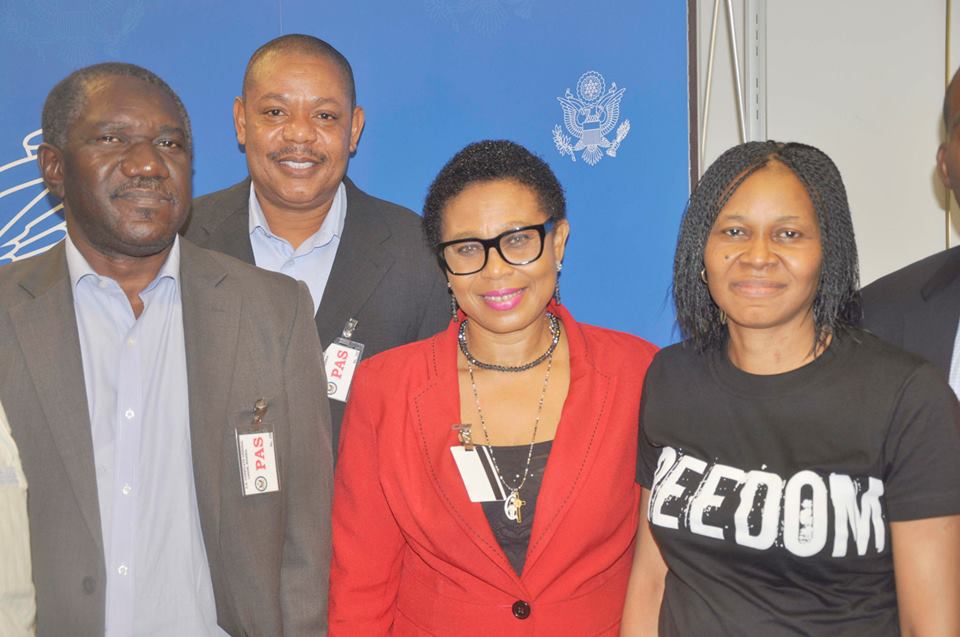
Mr Holloway, Hope Opara (President Eko International Film Festival)
Benny Uche of Public Affairs US Consulate,Dr Joe Okie-Odumaki,(President Campaign for Democracy)
On
Monday August 26th, 2013 we were at the Public Affairs Section of
the US Consulate General in Lagos Nigeria for the global viewing party to mark the 50th
anniversary of “The March” in Washington & Martin
Luther King Jr "I have a DREAM" speech. It was a wonderful experience to see the passion of
the black community in the US including very few white Americans who also
participated during that memorable freedom march.
Martin
Luther King Jr made the special Dream speech which changed the face of democratic events in
the US from that very day.
Our
own Dr Joe Okei - Odumaki, President of Campaign for Democracy responded
after the screening of that documentary and used that to reflect on her
struggle over the years for a better Nigeria and human rights including the right
of women which was addressed by others that spoke during the Q & A.


Holding hands and believing in the struggle for a better Nigeria
Subscribe to:
Posts (Atom)